

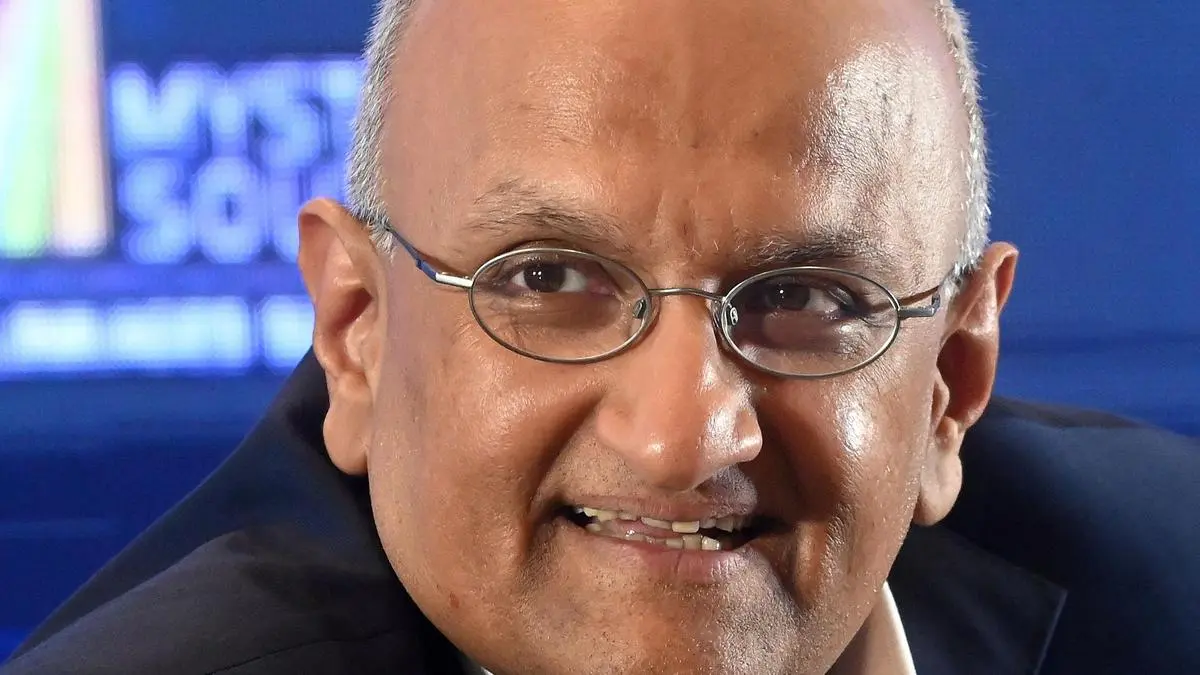
R. Dinesh, Chairman, TVS Supply Chain Solutions
| Photo Credit:
BIJOY GHOSH
The continued emphasis on capital expenditure, with an allocation of ₹12.2 lakh crore, reinforces that infrastructure investment is now a sustained, multi-year strategy rather than a one-off counter-cyclical measure. As this investment cycle is maturing, the focus has shifted from capacity creation to debottlenecking, integration and efficiency gains, with a sharper outcomes-oriented approach.
Proposals such as new Dedicated Freight Corridors directly support the next phase of debottlenecking across key freight corridors. At the same time, the development of 20 new National Waterways linking mineral-rich regions with industrial centres and ports, along with the Coastal Cargo Promotion Scheme aimed at increasing the share of inland and coastal waterways from 6 per cent to 12 per cent by 2047, clearly reinforces the government’s multimodal logistics thrust. The creation of Regional Centres of Excellence to address skill gaps is a welcome focus on building relevant talent, which will be essential to translating infrastructure investments into sustained efficiency gains.
Manufacturing push
The Budget places special emphasis on strengthening manufacturing and facilitating overseas investment into India by enabling deeper integration between Indian and global companies within international value chains. Measures such as a single, interconnected digital window for customs clearance, using imaging technology, along with targeted tax concessions and greater policy visibility, send a clear signal of intent to global investors. The thrust on new age sectors, including AI integration and technology deployment across manufacturing and supply chains, further enhances India’s competitiveness and growth potential.

Proposals such as new Dedicated Freight Corridors directly support the next phase of debottlenecking across key freight corridors.
| Photo Credit: HANDOUT_E_MAIL
For MSMEs, mandating TReDS as the settlement platform for all government procurement and integrating it with GeM creates a centralised ecosystem and can set the template for wider adoption by the private sector. The proposed ₹10,000 crore SME Growth Fund provides equity support, while the Corporate Mitras initiative across Tier-II and Tier-III towns can help create MSME champions by enabling compliance, capability building and market access, allowing these enterprises to integrate into corporate and global supply chains over time.
The Budget reinforces India’s growth ambition by enabling a larger role in global supply chains while building the capacity and capability of its logistics and manufacturing sectors. The focus on efficiency and ease of doing business strengthens India’s position as a competitive and reliable partner in global trade.
(The writer is Chairman, TVS Supply Chain Solutions Ltd. )
Published on February 2, 2026


